A guide for Stanford Health Care employees
Working at Stanford Health Care, living near the Palo Alto campus
The offer is signed, the badge photo is taken, and now the real question lands: where should you live? This page answers it fully for the Palo Alto medical campus. The four areas, the drive and the train from each, what homes cost, how the schools sort out, the money, and the road from first tour to keys, all in plain words, all on one page.
I am Simon Sahi, a real estate agent with Signature Properties here in Silicon Valley. I help people buy and sell homes in the towns around this campus every week, and I built this page so a Stanford Health Care employee can sit down once and understand the whole picture.
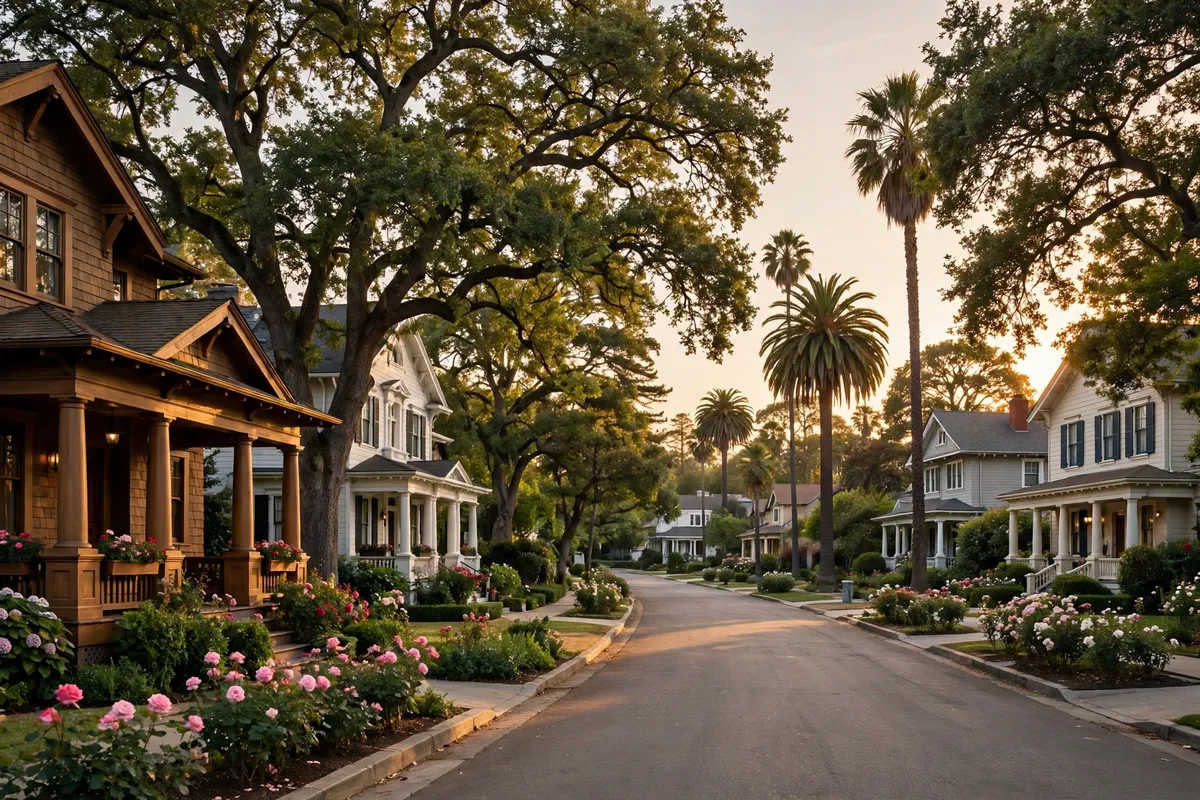
The campus sits inside one of the most beautiful residential cities in California, where streets near the hospital look like this one.
Who this page is for
Short answer: anyone at Stanford Health Care choosing where to live near the Palo Alto campus, from nurses on twelve hour shifts to physicians moving a whole family across the country.
This page was written for you if:
- You are a new hire moving to the Bay Area and starting from zero.
- You work shifts at the hospital and want a home that fits the hours you actually keep.
- You rent nearby today and want to own before the next lease renewal.
- Your family is arriving from another state or another country and needs the full picture in one sitting.
One honest note before we start: Stanford Health Care counts about 18,400 employees in its own 2024 to 2025 figures, and they do not all work on Pasteur Drive. The outpatient center in Redwood City, the clinics across the Peninsula and the Tri-Valley hospital in Pleasanton all carry real teams. This page is written for the Palo Alto campus. If your work sits at another site, call me and we will recenter the map, because the right areas shift with the site.
How to use this page: every section opens with the plain answer, then gives the detail under it. Read the short answers for the whole story in five minutes, or settle into the sections that matter to you. When a question is yours alone, call me and we will work it through.
The short answer
Short answer: Palo Alto itself for the shortest run and the unified schools, Menlo Park for the next door calm at a gentler price, Redwood City for value and room, and Los Altos for the top of the market, with the drive growing as the price falls.
- Shortest run, one district: live in Palo Alto. The hospital is in town, the schools run kindergarten to graduation in one district, and whole evenings come back to you.
- Next door calm: Menlo Park. A small town feel across the creek, a median about $650,000 below Palo Alto, and a drive that rarely bites.
- Value and room: Redwood City. The lowest median of the four by a wide margin, bigger homes for the money, and your own Stanford outpatient center in town.
- The top of the market: Los Altos. Garden streets, village calm and the highest prices of the four, for families who want the full Peninsula package.
One thing shapes this page more than any other: hospital work runs around the clock, and a shift that starts before dawn or ends after dark reads the map differently from an office day. The rest of this page proves each line of that, area by area, number by number.
The four areas compared
Short answer: all four areas work for campus life. They differ in drive time, price, schools and feel, and the honest split is simple: you pay for Palo Alto and Los Altos in price, and for Redwood City in minutes.
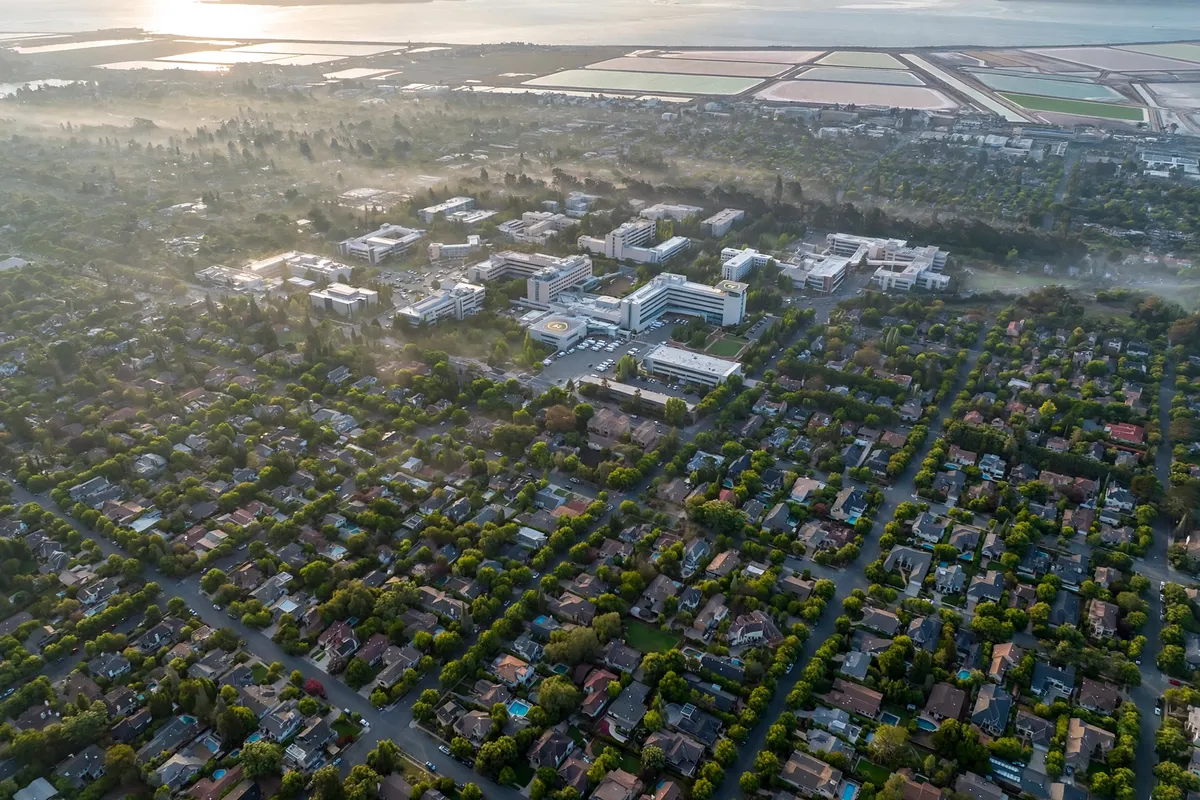
The medical campus sits where Palo Alto meets the Stanford lands, with four very different towns inside a forty minute ring.
| Area | Morning drive at peak | Drive off peak | Median price | Single family median | In one line |
|---|---|---|---|---|---|
| Palo Alto | About 10 to 20 minutes | About 10 to 15 minutes | About $3.61M | About $3.72M | The campus city itself, one unified district, the full Peninsula price |
| Menlo Park | About 15 to 25 minutes | About 10 to 20 minutes | About $2.95M | About $3.15M | Next door calm, small town streets, a gentler price than Palo Alto |
| Redwood City | About 25 to 40 minutes | About 20 to 30 minutes | About $1.9M | About $2.48M | The value of the four, room to grow, its own Stanford center in town |
| Los Altos | About 25 to 40 minutes | About 20 to 30 minutes | About $4.62M | About $5.11M | Garden streets and village calm at the highest price of the four |
Drive times are typical ranges in a car from the middle of each area to the Pasteur Drive campus, and they stretch on rainy days and school mornings. Shift starts before the office peak sit at the kind end of every range. Prices are approximate medians from Redfin for all home types across the three months ending September 2026. The single family median column gives the median for houses alone in October 2026 from MLS figures, because no source publishes a verified top tier price for these cities and none is invented here.
Palo Alto
The campus city itself, where the hospital, the university and some of the most loved streets in California share one map.
The drive. About ten to twenty minutes from most of the city, and a bike ride from the southern neighborhoods. The campus stands at the western edge of town, so the western and southern streets are the short end and the bay side is the long end, and even the long end stays inside half an hour outside the peak.
The homes and prices. Craftsman bungalows, colonials, eichlers on the flat southern streets, and grand homes in the north near the university. The citywide median sits at about $3.61M across all home types, single family homes alone median about $3.72M, and the top streets pass $5M as a matter of routine. Condos and townhomes near the two downtowns form the first rung.
The schools. Palo Alto Unified runs the whole city, kindergarten through twelfth grade in one district, with Palo Alto High and Gunn High both standing among the most respected public high schools in the state. For many hospital families this single fact settles the search.
The feel. Two downtowns, University Avenue and California Avenue, a farmers market tradition, the baylands at one edge and the foothills at the other. It is the complete Peninsula city, and it prices like it.
Who it suits. Families who want the shortest day and the unified schools, and anyone whose work and life both center on the Stanford lands.
Menlo Park
The small town across the creek: quieter than Palo Alto, gentler in price, and close enough that the drive rarely enters the conversation.
The drive. About fifteen to twenty five minutes at peak, across the creek and down Sand Hill Road or Willow Road, and about ten to twenty minutes off peak. The western neighborhoods, where most buyers land, sit at the short end of that range.
The homes and prices. Ranch homes and cottages on the flat, larger homes in the western hills of Sharon Heights and around Allied Arts. The citywide median sits at about $2.95M across all home types, single family homes alone median about $3.15M in October 2026, and the Allied Arts neighborhood alone medians above $4.3M. The spread inside one small city is wide, which is another way of saying there are doors in at several levels.
The schools. The city splits by address. West of the freeway, Menlo Park City School District and the small Las Lomitas district, two schools and a devoted following, both feed Menlo-Atherton High School. East of the freeway the picture changes to the Ravenswood district, so the exact address matters here more than in any other area on this page.
The feel. A genuine small town main street on Santa Cruz Avenue, the Dutch Goose and the Guild Theatre, Bedwell Bayfront Park for the evening walk. It lives quieter than its famous neighbor and likes it that way.
Who it suits. Buyers who want Peninsula schools and calm without the Palo Alto premium, and shift workers who value a short, surface street run home at any hour.
Redwood City
The value of the four: a full city with a real downtown, roomier homes for the money, and a Stanford center of its own.
The drive. About twenty five to forty minutes at peak, down 101 or across Woodside Road, and about twenty to thirty minutes off peak. It is the longest run on this page, and Redwood City families who make it for the hospital usually do it for the space and the price, with eyes open.
The homes and prices. Everything from bay side townhomes in Redwood Shores to hillside homes with views in Emerald Hills. The citywide median sits at about $1.9M across all home types, single family homes alone median about $2.48M, and the western hills ZIP code medians about $3.3M. Your money buys a class of home here that Palo Alto money cannot touch.
The schools. Redwood City School District for the younger years, then the Sequoia Union high schools, split by address among Sequoia, Woodside and Menlo-Atherton. Quality varies school by school more than in the other three areas, so the address check matters most here.
The feel. A working county seat with a revived downtown on Broadway, a theatre square, a waterfront at the port and Redwood Shores, and a slogan the locals defend: climate best by government test. It is the most city like of the four after Palo Alto, at half the entry price.
Who it suits. Buyers who want a real house with a real yard inside a hospital salary, and Stanford staff whose work sits at the Redwood City outpatient center itself.
Los Altos
Garden streets and village calm at the top of the market, the Peninsula dream in its purest form.
The drive. About twenty five to forty minutes at peak, up Foothill Expressway and across Page Mill or Arastradero, and about twenty to thirty minutes off peak. The route is prettier than most commutes in California, all orchard memory and oak shade, which softens the minutes.
The homes and prices. Ranch homes on large lots, new builds behind hedges, and some of the most contested streets in the valley. The citywide median sits at about $4.62M across all home types, the highest of the four, single family homes alone median about $5.11M in October 2026, and homes sell in days when they are priced with care. There is no gentle rung in Los Altos; the first rung is the point.
The schools. Los Altos School District for kindergarten through eighth grade, a district families move for on its own, then the Mountain View Los Altos high schools, Los Altos High and Mountain View High by address. The school story here is as strong as the streets.
The feel. A village downtown on Main and State streets, apricot orchards in its past and in a few lucky lots still, and a quiet that deepens street by street as you move south. It is the calmest ground on this page.
Who it suits. Senior physicians and executives who want the full package at once: the schools, the lots, the quiet, and a commute that stays civilized.
Getting to campus
Short answer: the train is a genuine option here, because Caltrain and Stanford free shuttle meet a short walk from the hospital doors, and eligible staff ride the train free. Most people still drive, and shift hours forgive much of the road.
By car
The campus stands between US-101 and Interstate 280, reached by Embarcadero Road and Quarry Road from the east and by Sand Hill Road from the west. From Menlo Park, Sand Hill and Willow Road do the work. From Redwood City, 101 south to Embarcadero or Woodside Road across. From Los Altos, Foothill Expressway to Page Mill or Arastradero is the pretty route and often the calm one.
One honest warning belongs in this section: parking at the medical center is tight and permit based for staff, and the big patient garage is not a day shift option. Many staff plan their housing around the train or the shuttle for exactly this reason. Ask your department where your team parks before you fall for a home, and weigh the answer the way you would weigh a bedroom.
By train and shuttle
Caltrain stops at Palo Alto station, the second busiest in the system, and at California Avenue. From Palo Alto station, Stanford Marguerite shuttle, free and open to the public, runs its X and Y lines straight to the medical center through the day and evening. The California Avenue station connects on the V line in the commute hours. Eligible Stanford Health Care employees also receive a Caltrain pass on their Clipper Card at no cost, which turns the whole Peninsula rail line into a free commute: Redwood City, Menlo Park and Palo Alto all sit on it.
For a shift worker the honest test is your own roster. Ride the train once at your real start time, walk the shuttle connection, and time the door to door run before you decide which areas are truly in range.
Shuttles and shared rides
Beyond the Marguerite, departments and the wider Stanford system run connections that change as sites and teams move, and the details live on internal pages no outside page can print for you. Treat your transport benefits as a first week question, the same as your parking assignment, and tell me what you learn. While we search, we will weigh it alongside the train, the schools and the price.
By bike
This is one of the great cycling corners of the Bay Area. Palo Alto and Menlo Park are flat, calm and laced with bike routes, the Stanford campus itself is a cycling city, and the Bay Trail carries riders from Redwood City down the shore. From Palo Alto and west Menlo Park, the bike is not the backup plan. For many staff it is the plan.
The money picture
Short answer: Peninsula prices are the story here, and the spread between Redwood City and Los Altos is the widest on any page in this guide series. Wherever you land, plan the whole cost of owning, not just the purchase price.
What homes cost by area
In round numbers, from Redfin figures for the three months ending September 2026: Redwood City starts the four at a median of about $1.9M, then Menlo Park at about $2.95M, Palo Alto at about $3.61M, and Los Altos at about $4.62M. Single family homes alone run higher everywhere: about $2.48M in Redwood City, $3.15M in Menlo Park, $3.72M in Palo Alto and $5.11M in Los Altos in October 2026. Below the medians sit condos and townhomes, the honest first rung in Palo Alto and Menlo Park. A median is a middle marker, not a quote, so before any offer we price the real home against the recent sales on its own street.
Buying on hospital pay
Hospital pay arrives in its own shapes: hourly wages with shift differentials, salaried clinical and administrative pay, and physician compensation with its own structures. Lenders in this valley know those patterns well. In general terms, a lender looks at your base pay, your differential and overtime history where it applies, and any signing or retention payments with a record behind them, and treats steady income of every kind as part of your picture. Income that has only just started counts for less than income with a history of landing.
So gather your offer letter, your pay records and any program letters in one folder, and put the full picture in front of a lender who works with medical pay, early, before you fall for a home. If you are arriving on a training salary with a known step up ahead, say so at that first meeting, because the plan for year one and the plan for year three are different houses. This section is general education, not a promise about any one loan.
Renting first or buying first
Renting first suits you if you land soon and know nothing here yet, if you want to learn your site, your shifts and your parking reality from inside before you commit, or if a large part of your pay arrives later in the year and you want it counted at full strength.
Buying first suits you if you know the Peninsula already, if your family wants to settle once and stay settled, or if your site is settled on Pasteur Drive and the right street has come up in Palo Alto or Menlo Park.
There is no single right order. Most hospital families I meet do one or the other with clear eyes, and both paths can be right. What matters is choosing on purpose, not by drift.
Closing costs and taxes, the basics
Closing costs. Beyond your down payment, allow roughly one to two percent of the price for the bundle of loan, title, escrow and recording charges. The exact figure depends on the loan and the home.
Property tax. In San Mateo and Santa Clara counties the yearly tax runs at roughly 1.1 to 1.25 percent of the purchase price, and it resets to your price when you buy. It is billed in two parts each year, and it is one of the most predictable costs of owning here.
Insurance. Lenders require home insurance, and the price follows the home and its setting. Hillside homes in Los Altos and the Redwood City hills can cost more to insure than homes on the flat.
Monthly dues. Condos and townhomes carry monthly association dues that cover shared costs. Single family homes in these four areas usually have no dues, or small ones.
These are the shapes of the costs, in general educational terms. For advice on your own taxes and money, sit with your own tax professional; for the numbers on a real home, sit with me.
The buying journey on a relocation timeline
Short answer: from first tour to keys in hand most often takes about two to four months here. The steps below show the shape of it, in order, fitted around hospital work.
- Weeks one and two: learn the ground. Settle in at work, confirm your site and your parking reality, and ride Caltrain and the Marguerite once just to feel the run. Drive the areas at school run hour and again at seven in the evening. Write down what your family will not give up.
- Line up the money. Talk with a lender early, put your full pay picture in front of them, differentials included, and get your approval in writing. Sellers across these areas expect to see it with the offer.
- Tour with purpose. See homes in two or three areas on the same day, so the trade between price, space and drive becomes real instead of theoretical. We tour around your shifts, early or late, because homes do not keep office hours and neither do I.
- Watch the rhythm. New homes land through the week and most open homes run on weekends. Los Altos homes have been selling in about nine days lately and Palo Alto in about two weeks, while Redwood City gives buyers a little more air. We set our pace by the area, not by habit.
- The offer. Price is only the start. In Redwood City you may have room to negotiate terms that Los Altos would never grant, and we will study the recent sales on the street before we set your number, so the offer fits the market it lands in.
- Closing. Once an offer lands, closing usually runs about three to four weeks, with inspections, the appraisal and the loan work packed inside it.
- Keys and settling. Move in, set up the train run or the school run, and breathe. My help does not end at the keys. Call me for the plumber, the gardener, or the permit question.
Family life in the four areas
Short answer: families thrive across all four areas. Schools lead the decision, and bay trails, village main streets and the foothills fill the rest of life.
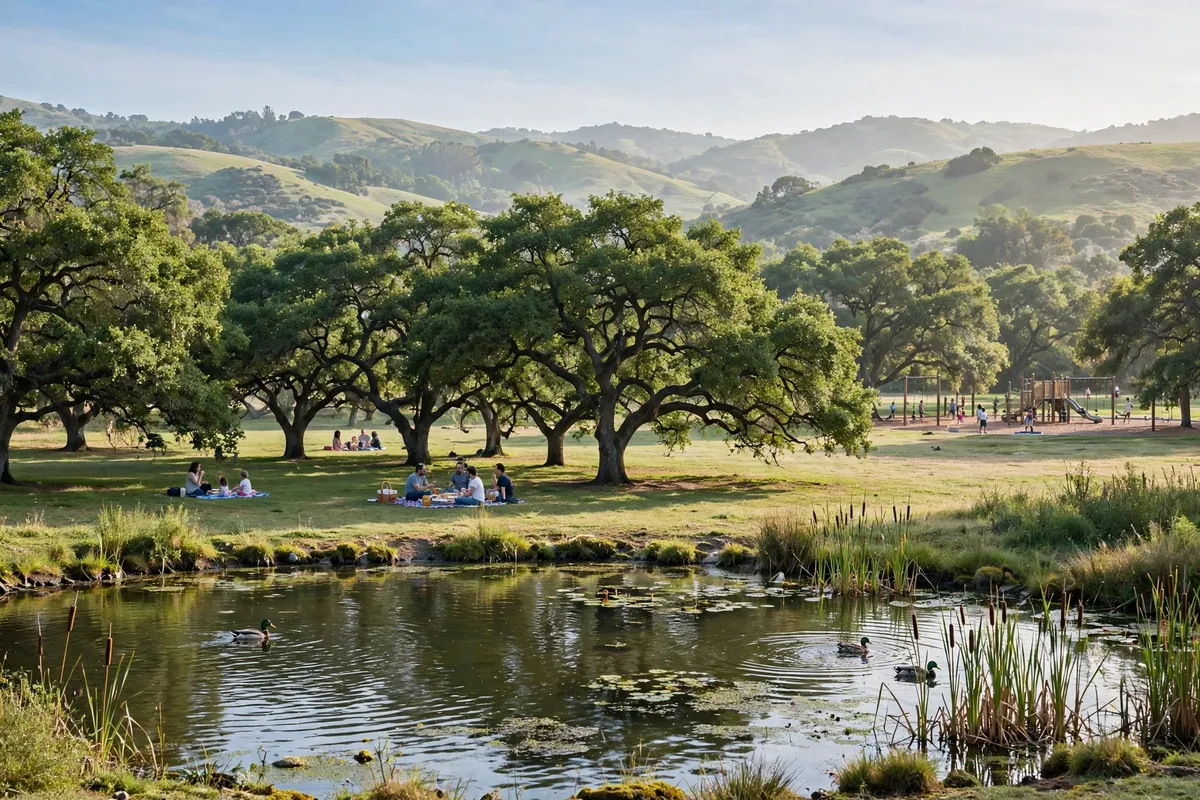
Weekends on this side of the valley look like this: lawns, oaks, a pond, and nowhere you need to be.
Schools, in one view
The school picture by area is covered in the cards above. One warning from experience: school boundaries here can turn on a single street, and two homes that look identical on a map can feed different schools. Menlo Park is the sharpest example on this page, where the freeway line changes the district entirely. Before you offer on any home, we confirm its assigned schools by its exact address, together, in writing. It takes ten minutes and it protects the whole reason many families choose these towns.
Parks and the outdoors
The Palo Alto Baylands give the city a wild shore of marsh and trail, and Foothills Park gives it oak hills above. Bedwell Bayfront Park is Menlo Park walking ground, with the bay on three sides. Redwood City answers with its waterfront parks and the trails of Edgewood and Pulgas Ridge above it, and Los Altos holds Rancho San Antonio, the county park where the valley goes to walk, with its working farm for small children. The Dish trails on the Stanford lands stand over all of it.
Daily life
Each area has a heart you can walk. University Avenue and California Avenue in Palo Alto, two downtowns in one city. Santa Cruz Avenue in Menlo Park. Courthouse Square and Broadway in Redwood City, with a summer concert season on the square. Main Street in Los Altos, a village in the truest sense. Add strong public libraries in every area and weekend sports leagues everywhere, and the ordinary errands of life stay close and easy.
Weekends
The coast at Half Moon Bay is about half an hour from the western areas when the ocean calls. Wine country, the city and the South Bay all sit inside a day trip. The Caltrain line that carries your commute also carries your Saturdays, up to San Francisco or down to San Jose. Families here do not run out of weekends.
Questions Stanford Health Care employees ask
Short answer: the questions below are the ones I hear most, answered the way I answer them in person.
Where do Stanford Health Care employees live?
Across Palo Alto first of all, then Menlo Park and Los Altos to either side, and down the rail line in Redwood City, with more staff spread along the whole Caltrain corridor in both directions. Staff at the Redwood City and Tri-Valley sites live by their own maps. The pattern follows three things: the site, the schools and the budget.
How long is the drive from Redwood City to the hospital?
About twenty five to forty minutes at peak and twenty to thirty minutes off peak. The train is the honest rival here: Caltrain from Redwood City station to Palo Alto station, then the free Marguerite shuttle to the hospital doors, and eligible staff ride the train free.
What does a home near the campus cost?
In round numbers, the median runs from about $1.9M in Redwood City to about $4.62M in Los Altos, with Menlo Park at about $2.95M and Palo Alto at about $3.61M, on Redfin figures for the three months ending September 2026. Condos and townhomes start well below those medians, and estate streets run far above them. All figures are approximate.
Is the train a real commute option?
For this campus, yes, one of the best in the valley. Caltrain to Palo Alto station, the free Marguerite shuttle on its X and Y lines to the medical center, and a Caltrain pass at no cost for eligible employees. Ride it once at your real shift time and judge the door to door run with your own eyes.
What about parking at the hospital?
Plan on it being part of the decision. Staff parking is permit based and tight, and the patient garage is not a day shift option. Many staff choose their housing around the train or the shuttle for this reason alone. Ask your department where your team parks in your first week, and tell me the answer while we search.
My work is at the Redwood City or Tri-Valley site, not Palo Alto. Does this page still help?
Partly. The money, schools and buying sections travel well, and the Redwood City card is written for your ground if that is your site. Tri-Valley staff live by an East Bay map this page does not cover. Call me and we will recenter the search on your actual site.
How do twelve hour shifts change the house hunt?
They forgive the drive and punish the parking. A shift that starts before dawn travels on empty roads from any of the four areas, and a short run home at the end of a long shift is worth real money. We plan the search around your actual roster, not a nine to five guess.
Can I buy on a training salary or a new contract?
In general, yes, with the right preparation. Lenders here see medical pay shapes every day, from training stipends to attending contracts. They look at what has landed, what is contracted, and the step ups written into your program or offer. Bring the full picture early, including the letters, and let them judge it whole. That is general education; your own lender will give you your own answer.
Which area has the best schools?
Palo Alto and Los Altos sit at the very top of most rankings, and their prices say so. Menlo Park holds two small districts families cross the valley for, on the west side of the freeway. Redwood City varies by school and by street. The honest method is to pick the exact schools first, then find the home inside their lines.
Should I rent first or buy right away?
If you know the Peninsula and your budget is settled, buying right away saves a second move. If you are new, a season of renting buys knowledge of the areas and your own site that protects a very large decision. If your move comes with support from your employer, check what it covers before you choose, because it can change the math.
Can you help if I am moving from another hospital or another country?
Yes, and it is common in medicine. Much of my work starts on video calls and filmed tours while a family is still far away, then one focused visit to walk the finalists in person. Nearly everything can be done well at a distance until the keys change hands.
Your first month checklist
Short answer: do these ten things in your first month and the rest of the move gets much easier.
- Confirm which site your work calls home, Palo Alto, Redwood City or Tri-Valley, because the right areas differ.
- Ride Caltrain and the Marguerite shuttle once at your real shift time, and drive the same trip at peak, so you know both of your options cold.
- Ask your department where your team parks, and weigh the answer while you weigh the homes.
- Drive each finalist area at school run hour, then drive it again in the evening.
- Pick the schools that matter to your family and learn their exact boundary lines.
- Put your full pay picture in front of a lender and get approval in writing.
- Set your true top number: the price plus the tax and insurance that follow it.
- Tour homes in at least two areas on the same day, at hours that fit your shifts.
- Spend one weekend morning on the main street of each finalist area.
- Save my number now, so the first question costs you nothing to ask.
A word from me
For more than twelve years I have helped families buy and sell homes in these towns, from first homes to grand estates, and I give every home the same care. My clients have left me 104 five star reviews, and the homes I have helped sell here add up to more than $250M. The numbers I trust most are simpler: my phone rings when a past client has a question, years after the keys.
If you are weighing a move to Stanford Health Care, or a move across town, let us talk it through. One call, no pressure, and you will leave knowing the areas, the numbers and the next step. Call me on the Peninsula line at (650) 274 1134 or the South Bay line at (408) 389 6939, or write to me at SIMON@SPSILICONVALLEY.COM.
I am glad you found this page. Wherever you land, welcome to the neighborhood.
Simon Sahi
Real Estate Agent, Signature Properties
CA DRE #01953287

Thinking of buying or selling near the Palo Alto campus?
Let us talk through the areas, the numbers and your timing, in one honest conversation.
Peninsula (650) 274-1134
South Bay (408) 389-6939