A guide for Google employees
Working at Google, living near the Mountain View campus
The offer is signed, the start date is set, and one question rises above the rest: where do we live? This page answers that question in full for anyone joining or already working at the Google campus in Mountain View. The four areas worth your attention, the real drive times, the prices, the schools, the shuttle, the bike run, the money, and the buying journey, all in plain words, all on one page.
I am Simon Sahi, a real estate agent with Signature Properties here in Silicon Valley. Mountain View is the town I work in every week, and I built this page so a Google employee can sit down once and see the whole picture clearly.
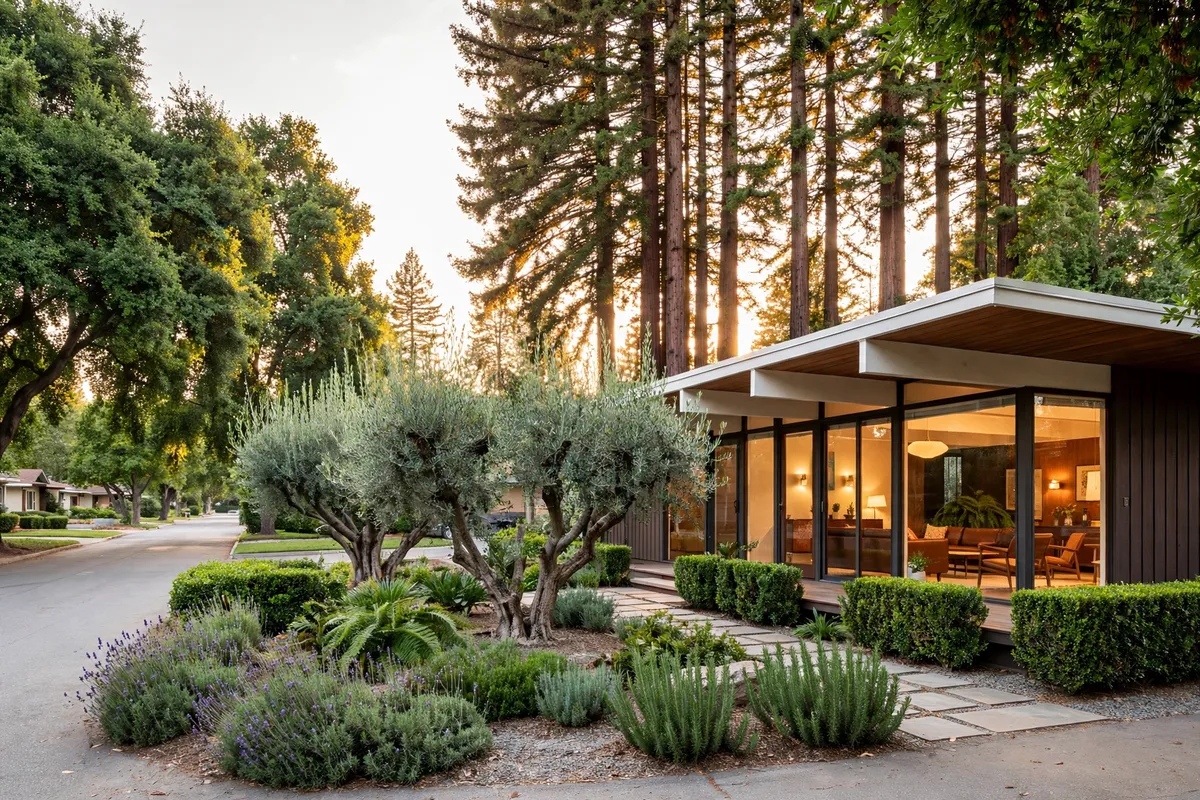
Glass, gardens and tall trees: the Eichler streets of Mountain View and Palo Alto sit minutes from the campus gates.
Who this page is for
Short answer: anyone at Google who is choosing where to live near the Mountain View campus, from a first hire packing up across the country to a longtime Googler tired of a rental.
This page was written for you if:
- You are relocating for a Google role and the map of this valley is still a blur of town names.
- You work at the campus today, rent in the area, and want your money building your own walls.
- You live further out and the daily run up Highway 101 has worn thin.
- Your family is arriving from another state or another country and needs the full picture in one sitting, schools included.
How to use this page: every section opens with the plain answer, then gives the detail under it. Read only the short answers and you hold the story in five minutes. Settle into the sections that match your life for the rest. When a question belongs to your family alone, call me and we will work it through.
The short answer
Short answer: Mountain View for life inside the story, Sunnyvale for value with an easy run, Los Altos for village calm and top schools, Palo Alto for the full prestige package at the top of the price ladder.
- Inside the story: live in Mountain View. The campus is in town, Castro Street gives you a real downtown, and the bike run to work is the best in the valley.
- Value with an easy run: Sunnyvale. A friendlier median, strong high schools, and a drive of about ten minutes when the roads are clear.
- Village calm and top schools: Los Altos. Quiet streets, tall oaks, a true village downtown, and a premium price for all of it.
- The prestige package: Palo Alto. Stanford at its shoulder, University Avenue for dinner, and some of the most prized school seats in California.
The rest of this page proves each line of that, area by area, number by number.
The four areas compared
Short answer: all four areas serve campus life well. They differ in drive time, price, schools and daily feel, and the right one fits your family and your budget at the same time.

The campus end of Mountain View meets the Bay: marsh, lake and levee trails on one side, leafy streets on the other.
| Area | Morning drive at peak | Drive off peak | Median price | High end | In one line |
|---|---|---|---|---|---|
| Mountain View | About 5 to 15 minutes | About 5 to 10 minutes | About $2.2M | $5M and up | The campus hometown, with a walkable downtown |
| Sunnyvale | About 15 to 25 minutes | About 10 minutes | About $2.53M | About $3.1M and up | The valley center, priced a step friendlier |
| Los Altos | About 15 to 25 minutes | About 12 to 15 minutes | About $4.9M | $10M and up | Village calm, tall trees, a premium for quiet |
| Palo Alto | About 20 to 30 minutes | About 10 to 15 minutes | About $4.13M | $10M and up | Stanford, University Avenue, prized schools |
Drive times are typical ranges in a car from the middle of each town to the campus in North Bayshore, and they stretch on rainy days and school mornings, when the roads into the campus end of town load up early. Prices are approximate medians drawn from the city guides on this site.
Mountain View
The campus hometown itself, with a real downtown and the shortest run of the four.
The drive. Most of the city sits five to fifteen minutes from the campus by car, even at peak, and the southern streets run shorter still. Off peak, much of town is inside ten minutes.
The homes and prices. Eichler tracts with glass and atriums, ranch homes from the building years, cottages near downtown, and a growing stock of condos and townhomes. The median price is about $2.2M, the lowest of these four areas, and the high end reaches $5M and up.
The schools. Here is the local quirk worth learning early. Most of the city feeds the Mountain View Whisman School District for the younger years, while the southern pockets around Cuesta Park and Blossom Valley feed the Los Altos School District instead. Every public high school student attends the Mountain View Los Altos Union High School District, at Mountain View High School or Los Altos High School. Two setups inside one city means the exact street matters.
The feel. A working town with a global payroll. Castro Street is a genuine main street, the Sunday farmers market fills the transit center lot, and Shoreline Park spreads 750 acres of lake and green at the Bay end of town.
Who it suits. Anyone who wants the campus close, a downtown to walk to, and the bike run as a daily option.
Sunnyvale
The center of the valley, a step friendlier on price, with a quick line to the campus.
The drive. About fifteen to twenty five minutes at peak, riding Highway 101 or Mathilda Avenue, and about ten minutes off peak. The run is simple and it repeats well.
The homes and prices. Ranch neighborhoods, townhome communities and downtown condos, spread wide across the city. The median price is about $2.53M, with the high end around $3.1M and up, so the same money buys more house here than in Los Altos or Palo Alto.
The schools. The Sunnyvale School District covers the younger years, and high school runs through the Fremont Union High School District, including Homestead High School, Fremont High School and Monta Vista High School, one of the most sought after high school districts in the state.
The feel. Practical and sunny, with orchard roots still showing at the Heritage Park Museum. Murphy Avenue downtown carries the dining, Baylands Park opens the northern edge to the sky, and the Saturday farmers market is a standing date.
Who it suits. Buyers who want strong schools and campus access without paying the Peninsula premium in full.
Los Altos
A village in the trees just south of the campus, calm and green, at a premium.
The drive. About fifteen to twenty five minutes at peak, rolling along San Antonio Road or Foothill Expressway, and about twelve to fifteen minutes off peak.
The homes and prices. Larger lots under tall oaks, from loved originals to full estates. The median price is about $4.9M, the highest of the four, and the high end passes $10M.
The schools. Los Altos School District for the younger years, then Los Altos High School in the Mountain View Los Altos Union High School District. Both sit near the top of the California rankings, and southern Mountain View pays a premium to borrow the younger years of this district.
The feel. Calm, green and village scaled, with a true downtown on State Street and Main Street, a farmers market in season, Shoup Park as the local living room and Rancho San Antonio trails at the edge of town.
Who it suits. Families who want quiet, space and schools, and can carry the price of all three.
Palo Alto
Stanford town, the Peninsula at its most prized, a straight run north to the campus.
The drive. About twenty to thirty minutes at peak, when Charleston Road and Highway 101 load up, and about ten to fifteen minutes off peak. Many Palo Alto riders skip the question and take the trail or the train.
The homes and prices. Historic Professorville cottages, grand Old Palo Alto homes, Eichler tracts in the south, and downtown condos. The median price for a single family home is about $4.13M, and the high end passes $10M, with a string of sales above that line every year.
The schools. Palo Alto Unified School District serves nearly the whole city, with Palo Alto High School and Gunn High School among the most sought after public high schools in the state. School seats are a real share of what the price buys here.
The feel. A college town with a long memory. University Avenue is the great main street of the Peninsula, California Avenue holds a Sunday farmers market, the Baylands levees carry the morning cyclists, and Stanford fills the calendar with arts and games.
Who it suits. Buyers who want the schools, the downtown and the Stanford air, and accept the top of the ladder as the entry fee.
Getting to campus
Short answer: you have four real ways in: the car, the Google shuttle, the bike, and the train paired with a shuttle or a bike at the campus end. This campus runs on bikes and shuttles as much as on cars, and the areas above were picked with all four in mind.
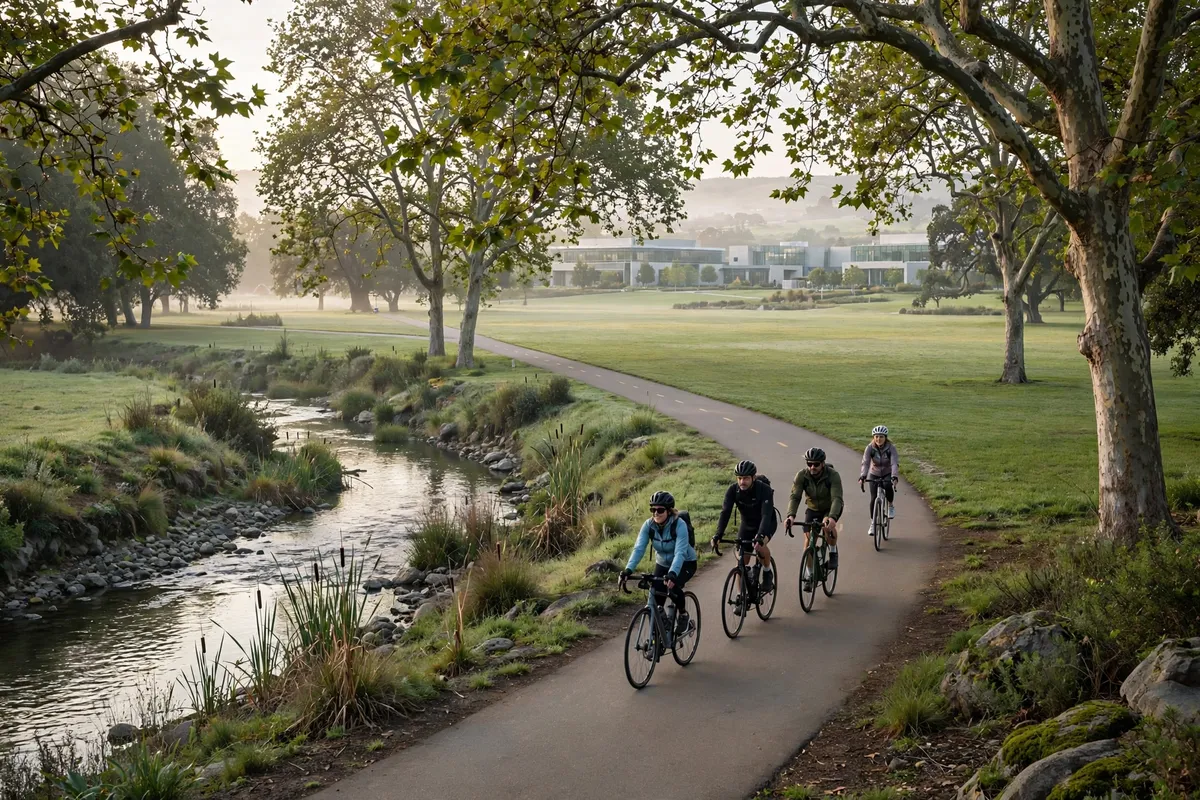
The Stevens Creek Trail carries thousands of riders between the neighborhoods and the campus end of town.
By car
The campus stands in North Bayshore, where Shoreline Boulevard and Charleston Road feed in from Highway 101 and Highway 85. From Los Altos, San Antonio Road is the direct line. From Sunnyvale, Mathilda Avenue and Highway 101 do the work, with Highway 237 as the relief valve. From Palo Alto, most drivers ride 101 north or work across on Charleston Road.
Learn the shape of the morning early. The last stretch into North Bayshore is the slow part, not the freeway, so a home ten minutes from the freeway exit can still mean a longer door to door run at peak. The drive times in the table above already carry that truth inside them, and a second route in your pocket saves the hard mornings.
The Google shuttle
Google runs one of the largest private shuttle networks in the country for its employees, reaching across the Bay Area and deep into its cities. For many Googlers the shuttle is the commute: a seat, a table, and work or rest instead of traffic. A home near a pickup point can make an area that looks far on the map feel close in daily life.
Here is the honest part. The routes and stops live on Google internal pages, and they shift as teams and buildings change, so no outside page can print them for you, this one included. Treat the shuttle map as a first week task. Find the pickups near any home you like before you fall for the home, and share those points with me. While we search, we will weigh the shuttle alongside schools and price, because a home that fits the shuttle fits your life.
By bike
This is the campus where the bike run is famous, and the Stevens Creek Trail is the reason. The paved trail runs from the foothills through Mountain View to the Bay, passing the campus end of town, and thousands of employees ride it each morning. Homes in Mountain View itself, and pockets of Los Altos and Sunnyvale near the trail, turn the commute into the best part of the day. If riding to work matters to you, put trail access on your list early, beside schools and price, and we will shop with a map of the trail open.
By train
Mountain View station sits downtown on Castro Street, where Caltrain and the VTA light rail meet, and Sunnyvale has its own Caltrain station. Many riders pair the train with a company shuttle or a bike at the campus end. If your life includes regular trips up the Peninsula or into San Francisco, living near a station earns its keep every week, and downtown Mountain View puts the station in walking range of dinner.
The money picture
Short answer: homes near this campus cost real money, and the shape of your pay matters as much as its size. Plan the whole cost of owning, not just the price.
What homes cost by area
In round numbers: Mountain View starts the four at a median of about $2.2M, then Sunnyvale at about $2.53M, Palo Alto at about $4.13M for a single family home, and Los Altos at about $4.9M. Condos and townhomes sit well below those medians and are the usual first rung. Estates sit far above them. A median is a middle point, not a promise, so we will always price a real home against the recent sales on its own street.
Renting first or buying first
Renting first suits you if you land soon and know nothing here yet, if you want to feel the areas across a few months before you commit, or if a large part of your pay arrives later in the year and you want it counted at full strength.
Buying first suits you if you know the valley already, if your family wants to settle once and stay settled, or if you would rather put rent money into your own walls from the first month.
There is no single right order. Most Google families I meet do one or the other with clear eyes, and both paths can be right. What matters is choosing on purpose, not by drift.
Buying while paid partly in stock
A large share of pay at Google can arrive as stock units that vest over time, in monthly steps once the first stretch has passed. Lenders in this valley know that pattern well, because they see it every day. In general terms, a lender looks at your base pay, your bonus history, and the pattern of stock that has vested and landed over the past couple of years, and treats steady vesting as part of your income picture. Grants that have not vested yet usually count for less than stock that has already been landing.
So gather your offer letter, your pay records and your vesting schedule in one folder, and put the full picture in front of a lender who works with tech pay, early, before you fall for a home. This section is general education, not a promise about any one loan. Your own numbers will decide what you can carry, and a good lender will show you those numbers plainly.
Closing costs and taxes, the basics
- Closing costs. Beyond your down payment, allow roughly one to two percent of the price for the bundle of loan, title, escrow and recording charges. The exact figure depends on the loan and the home.
- Property tax. All four areas on this page sit in Santa Clara County, where the yearly tax runs at about 1.2 percent of the purchase price, and it resets to your price when you buy. It is billed in two parts each year, and it is one of the most predictable costs of owning here.
- Insurance. Lenders require home insurance, and the price follows the home and its setting. Homes near the Bay shore and the creek lines can carry extra questions, so we read the insurance picture on any home before you offer.
- Monthly dues. Condos and townhomes carry monthly association dues that cover shared costs. Single family homes in these four areas usually have no dues, or small ones.
These are the shapes of the costs, in general educational terms. For advice on your own taxes and money, sit with your own tax professional; for the numbers on a real home, sit with me.
The buying journey on a relocation timeline
Short answer: from first tour to keys in hand most often takes about two to four months here. The steps below show the shape of it, in order.
- Weeks one and two: learn the ground. Settle in at work, pull up the shuttle map, ride a stretch of the Stevens Creek Trail at commute hour, and drive the four areas at school run hour and again at seven in the evening. Write down what your family will not give up.
- Line up the money. Talk with a lender early, put your full pay picture in front of them, and get your approval in writing. Sellers in these towns expect to see it with the offer.
- Tour with purpose. See homes in two or three areas on the same day, so the trade between price, space and drive becomes real instead of theoretical. If Mountain View is a finalist, we check which school setup each pocket feeds as we go.
- Watch the rhythm. New homes land through the week and most open homes run on weekends. Good homes in these towns often take offers about a week after they list.
- The offer. Price is only the start. Strong offers here often carry short timelines and few conditions, and many homes draw several offers at once. We will study the recent sales on the street before we set your number.
- Closing. Once an offer lands, closing usually runs about three to four weeks, with inspections, the appraisal and the loan work packed inside it.
- Keys and settling. Move in, set up the shuttle run or the school run, and breathe. My help does not end at the keys. Call me for the plumber, the gardener, or the permit question.
Family life in the four areas
Short answer: this corner of the valley is family country. Schools lead the decision, and lakes, trails, markets and main streets fill the rest of life.
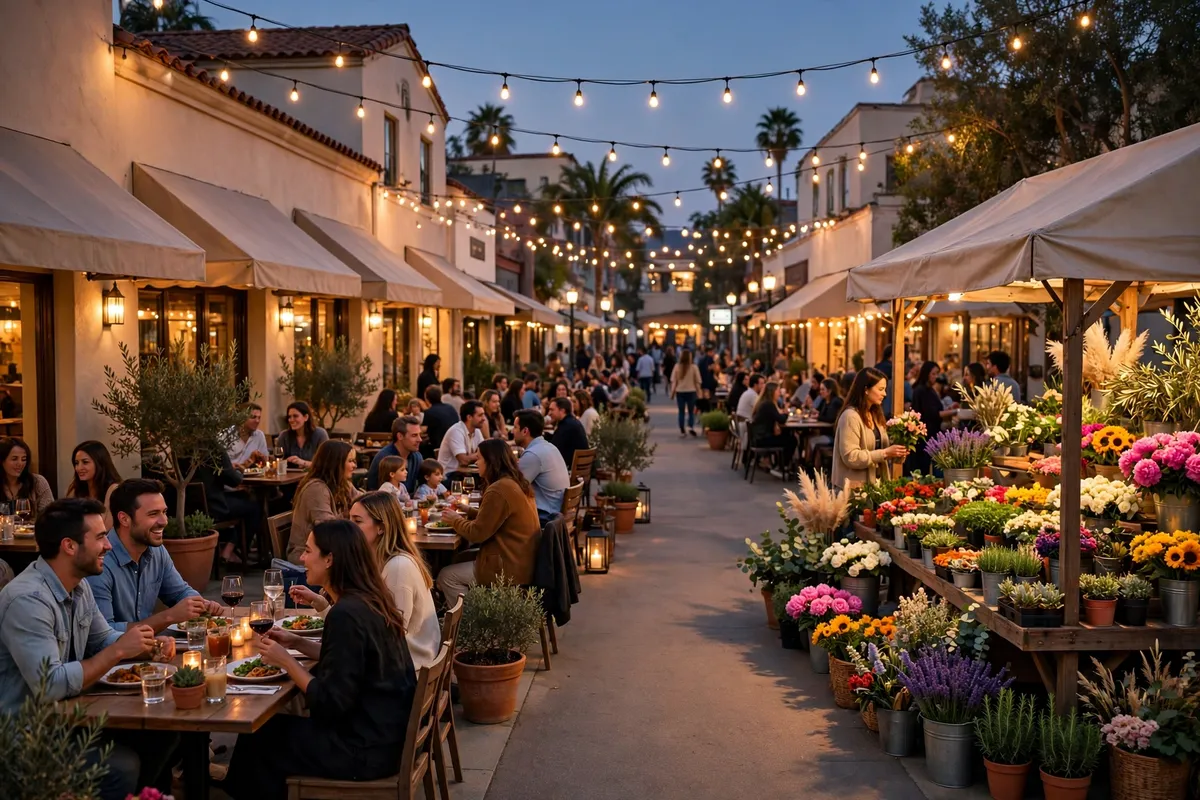
Main streets like Castro Street carry the evenings: dinner outside, a market stall, and a slow walk home.
Schools, in one view
The school picture by area is covered in the cards above. One warning from experience: school boundaries here can turn on a single street, and two homes that look identical on a map can feed different schools. Mountain View adds its own twist, with two district setups inside one city. Before you offer on any home, we confirm its assigned schools by its exact address, together, in writing. It takes ten minutes and it protects the whole reason many families choose these towns.
Parks and the outdoors
Shoreline Park is the giant of the group: 750 acres at the Bay end of Mountain View, with a lake for sailing and kiteboarding, lawns, trails, and the Shoreline Amphitheatre lifting its sails over the summer concert season. Cuesta Park is the neighborhood anchor, Eagle Park holds the pool, and the Baylands trails run for flat miles. Palo Alto answers with its own Baylands and the Stanford Dish loop in the foothills. Sunnyvale spreads Baylands Park and Las Palmas Park across its neighborhoods, and above Los Altos the Rancho San Antonio trails climb into the hills from a working farm.
Daily life
Each town has a heart you can walk. Castro Street in Mountain View, with the Sunday farmers market at the station. Murphy Avenue in Sunnyvale, the dining street downtown, with a Saturday market of its own. State Street and Main Street in Los Altos, village scaled and calm. University Avenue in Palo Alto, the grand main street, with California Avenue and its Sunday market as the quieter second heart. Add strong public libraries, weekend sports leagues in every town, and the ordinary errands of life stay close and easy.
Weekends
Summer nights belong to the Amphitheatre, when the biggest tours play over the lake. Stanford fills Palo Alto with arts, lectures and game days. The Dish loop is the local fitness ritual at sunrise. The coast at Santa Cruz is about forty five minutes over the hill when the ocean calls, and the foothill trails carry the hikers while the Bay levees carry the riders. Families here do not run out of Saturdays.
Questions Google employees ask
Short answer: the questions below are the ones I hear most, answered the way I answer them in person.
Where do Google employees live?
Everywhere around the campus, with the thickest clusters in Mountain View itself, then Los Altos, Palo Alto and Sunnyvale, and more in Cupertino, Campbell and San Jose when price leads. The pattern follows three things: the drive, the schools and the budget.
How long is the drive from Palo Alto to the Google campus?
About twenty to thirty minutes at peak and ten to fifteen minutes off peak from the middle of town. The slow part is the last stretch into North Bayshore, so homes on the Mountain View side of Palo Alto run shorter than the map suggests.
What does a home near the Google campus cost?
In round numbers, the median runs from about $2.2M in Mountain View to about $4.9M in Los Altos, with Sunnyvale at about $2.53M and Palo Alto at about $4.13M for a single family home. Condos and townhomes start well below those medians, and estates run far above them. All figures are approximate.
Which area has the best schools?
Palo Alto Unified and the Los Altos districts sit at the very top of most rankings, and the Fremont Union high schools serving Sunnyvale are close behind. Mountain View holds two strong setups, and its southern pockets borrow the Los Altos younger years. The honest method is to pick the exact schools first, then find the home inside their lines.
Can I really bike to work?
Yes, and thousands do. The Stevens Creek Trail runs from the foothills through Mountain View to the Bay, passing the campus end of town, and it turns a Mountain View, Los Altos or Sunnyvale address near the trail into one of the finest commutes in the valley. The campus end is built for riders, with parking and showers for bikes.
Should I rent first or buy right away?
If you know the valley and your budget is settled, buying right away saves a second move. If you are new to the area, a season of renting buys knowledge that protects a very large decision. If your move comes with support from your employer, check what it covers before you choose, because it can change the math.
Can I buy if much of my pay is stock?
In general, yes. Lenders who serve this valley see stock pay every day, and they look at the pattern of what has vested and landed over time, along with base pay and bonus. Bring the full picture early and let them judge it whole. That is general education; your own lender will give you your own answer.
How fast do homes sell here?
Good homes in these four towns often take offers within about a week of listing, and many draw several offers. Being ready matters more than raw speed: approval in writing, a clear top number, and a calm head on offer day.
What will my property tax look like?
About 1.2 percent of your purchase price per year in Santa Clara County, resetting to your price when you buy. It is billed in two parts each year, and it is one of the most predictable costs of owning here.
Is the shuttle a real option for daily life?
For many Google employees, yes. Google runs private employee shuttles across the Bay Area. The stops sit on Google internal pages, so find your nearest pickup in your first weeks and let it shape where you look. A home that fits the shuttle often beats a home that is merely closer on the map.
Can you help if I am buying from another state or country?
Yes, and it is common. Much of my work starts on video calls and filmed tours while a family is still far away, then one focused visit to walk the finalists in person. Nearly everything can be done well at a distance until the keys change hands.
Your first month checklist
Short answer: do these ten things in your first month and the rest of the move gets much easier.
- Get the Google shuttle map from work and mark the pickups near the areas you like.
- Ride or walk a stretch of the Stevens Creek Trail at commute hour, to feel the bike run for yourself.
- Drive each area at school run hour, then drive it again in the evening.
- Pick the schools that matter to your family and learn their exact boundary lines.
- If Mountain View makes your final list, learn which of its two school setups each pocket feeds.
- Put your full pay picture, base pay, bonus and vesting, in front of a lender and get approval in writing.
- Set your true top number: the price plus the tax and insurance that follow it.
- Tour homes in at least two areas on the same day.
- Spend one Sunday morning on Castro Street and one Saturday on Murphy Avenue.
- Save my number now, so the first question costs you nothing to ask.
A word from me
For more than twelve years I have helped families buy and sell homes in these towns, from first homes to grand estates, and I give every home the same care. My clients have left me 104 five star reviews, and the homes I have helped sell here add up to more than $250M. The numbers I trust most are simpler: my phone rings when a past client has a question, years after the keys.
If you are weighing a move to Google, or a move across town, let us talk it through. One call, no pressure, and you will leave knowing the areas, the numbers and the next step. Call me on the Peninsula line at (650) 274 1134 or the South Bay line at (408) 389 6939, or write to me at SIMON@SPSILICONVALLEY.COM.
I am glad you found this page. Wherever you land, welcome to the neighborhood.
Simon Sahi
Real Estate Agent, Signature Properties
CA DRE #01953287

Thinking of buying or selling near the Google campus?
Let us talk through the areas, the numbers and your timing, in one honest conversation.
Peninsula (650) 274-1134
South Bay (408) 389-6939