A guide for Samsung Semiconductor employees
Working at Samsung Semiconductor, living near the North First Street campus
You got the job, or the transfer, and now the real question lands: where should you live? This page answers it fully for Samsung Semiconductor's North American headquarters on North First Street in San Jose. The four areas, the drive from each, what homes cost, how the schools sort out, the money, and the road from first tour to keys, all in plain words, all on one page.
I am Simon Sahi, a real estate agent with Signature Properties here in Silicon Valley. I help people buy and sell homes in the towns around this campus every week, and I built this page so a Samsung Semiconductor employee can sit down once and understand the whole picture.
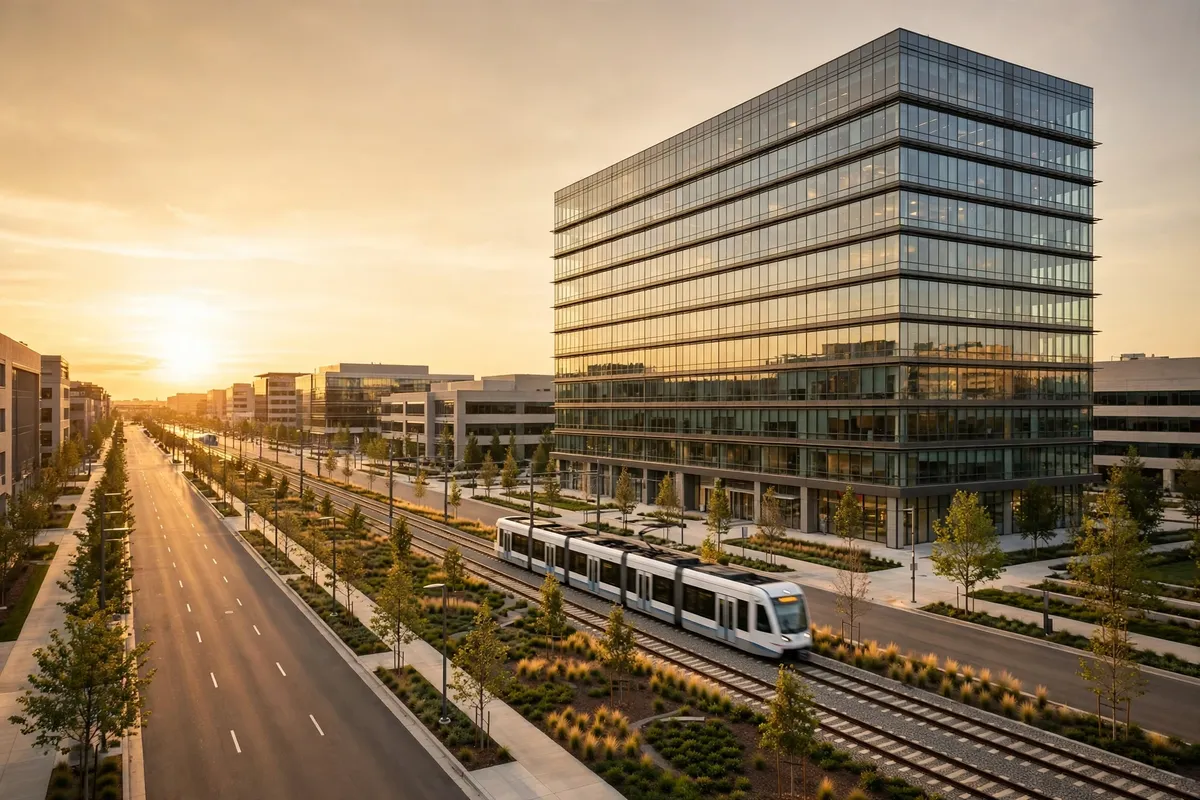
The campus stands on North First Street at Tasman Drive, with light rail in the median at its corner.
Who this page is for
Short answer: anyone at Samsung Semiconductor choosing where to live near the North First Street headquarters, whether you arrive next month or next year.
This page was written for you if:
- You are a new hire moving to the Bay Area and starting from zero.
- You already work at the campus and rent nearby, and you are ready to own.
- Your work sits in memory, logic, displays or the research labs and your days on site are set by the lab, not by choice.
- Your family is arriving from another state or another country and needs the full picture in one sitting.
One honest note before we start: this guide is for Samsung Semiconductor, the chip business whose North American headquarters stands at 3655 North First Street. Samsung has other arms nearby with similar names: Samsung Research America works in Mountain View and the Samsung Strategy and Innovation Center sits in Menlo Park. If your offer is from one of those, your campus is a different one and the map changes. And if you have seen 2026 headlines about a Samsung headquarters move and hundreds of roles, those concern Samsung Electronics America in New Jersey, a different company in a different state. The San Jose chip campus's own documented news in 2025 and 2026 is expansion, set out below.
How to use this page: every section opens with the plain answer, then gives the detail under it. Read the short answers for the whole story in five minutes, or settle into the sections that matter to you. When a question is yours alone, call me and we will work it through.
The short answer
Short answer: San Jose for the shortest run and the lowest prices of the four, Santa Clara for the unified schools and the river between you and work, Sunnyvale for the house stock and the freeway line, and Mountain View for the downtown and the train at the highest prices of the four.
- Shortest run, lowest entry: live in San Jose. The campus is inside the city, its northern neighborhoods are minutes away, and its prices start the four.
- The unified schools: Santa Clara. One district, kindergarten through high school, and a short run east to the campus corner.
- The house stock and the freeway: Sunnyvale. Family streets, strong schools by address, and 237 running straight at the campus.
- The downtown and the train: Mountain View. Castro Street and Caltrain, at the longest drive and the joint highest prices of the four.
The campus itself deserves a word before the four areas: it is a ten story headquarters that Samsung opened in 2015 and has been quietly growing around, buying the buildings beside it in cash in 2025 and again in 2026. This is a campus putting down roots, and the housing question it asks is a long term one. The rest of this page proves each line of the short answer, area by area, number by number.
The four areas compared
Short answer: all four areas work for campus life. They differ in price, schools and feel far more than they differ in minutes, and the campus's own city holds both the shortest drive and the lowest prices, which is rarer in this series than you might think.
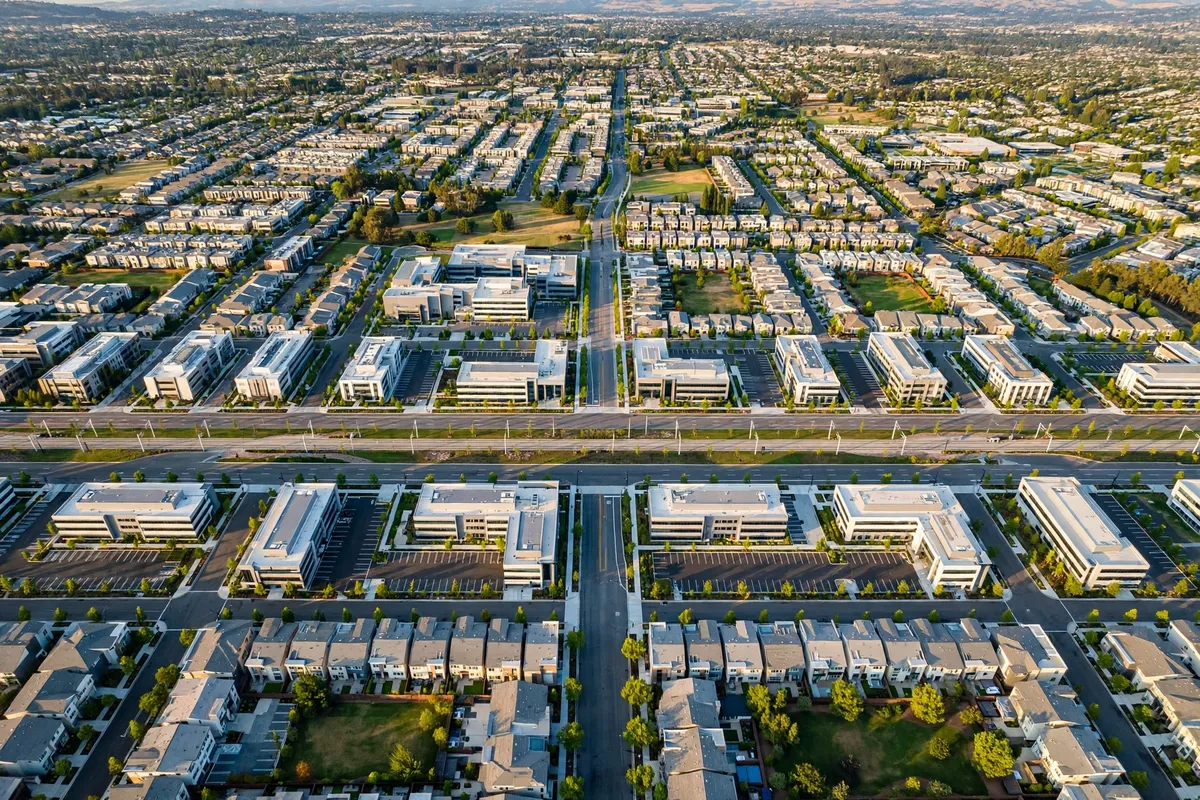
North First Street runs north from downtown San Jose through the campus district to Tasman Drive and 237.
| Area | Morning drive at peak | Drive off peak | Median price | Single family median | In one line |
|---|---|---|---|---|---|
| San Jose | About 25 to 40 minutes | About 15 to 20 minutes | About $1.35M | About $1.57M | The campus's own city: the shortest run and the lowest prices |
| Santa Clara | About 20 to 35 minutes | About 12 to 18 minutes | About $1.64M | About $1.82M | One unified district and a short run east |
| Sunnyvale | About 30 to 45 minutes | About 15 to 25 minutes | About $1.88M | About $2.82M | Family streets and 237 straight at the campus |
| Mountain View | About 35 to 55 minutes | About 20 to 30 minutes | About $1.84M | About $3.02M | Castro Street and Caltrain, the longest run of the four |
Drive times are typical ranges in a car from the middle of each area to the campus. From San Jose's own northern neighborhoods the run is shorter than the city figure, about fifteen to twenty five minutes at peak on surface streets. Prices are approximate medians from Redfin for all home types across the three months ending September 2026. The single family median column gives the median for houses alone in September 2026 from the Santa Clara County association of realtors.
San Jose
The campus's own city: every kind of home the valley builds, the lowest prices of the four, and the campus inside its own borders.
The drive. About twenty five to forty minutes at peak from the middle of the city and fifteen to twenty off peak, and much less from the northern neighborhoods the campus actually sits among: River Oaks, Berryessa and the streets off Tasman run about fifteen to twenty five minutes at peak without touching a freeway. Downtown adds the First Street or 87 run north.
The homes and prices. The widest choice in this series: North San Jose townhomes and condos near the campus, Berryessa family streets, Willow Glen's older homes, Almaden Valley at the south end. The citywide median sits at about $1.35M across all home types, the lowest of the four, and single family homes alone median about $1.57M on September 2026 county association figures, also the lowest. A big city averages hide big differences, so we price street by street.
The schools. The surprise of this page, stated plainly: the campus area is not in San Jose Unified. Homes around North First Street and Tasman answer to Santa Clara Unified on the west and north side, whose newest high school, Kathleen MacDonald High, stands on Zanker Road in San Jose itself, and to Berryessa Union for the younger years and East Side Union for high school on the east side. San Jose Unified serves downtown and the south. A San Jose address tells you nothing about schools until the exact address is checked.
The feel. A real city, the valley's largest: a downtown with towers and an arena, Japantown, Willow Glen's village main street, and quiet family districts in every direction. Life here is chosen neighborhood by neighborhood, and the choice is wide.
Who it suits. Anyone who wants the shortest day and the lowest entry of the four, North San Jose buyers who want to live beside the campus district, and households who want a big city's choice at a valley price.
Santa Clara
The unified school city: one district start to finish, a river trail at its east edge, and a short run to the campus corner.
The drive. About twenty to thirty five minutes at peak and twelve to eighteen off peak from the middle of the city, by 101 or 880 or by the surface streets across the river, and less from Santa Clara's northern edge, which sits across the Guadalupe River from the campus district itself.
The homes and prices. Postwar family streets, the Old Quad's older homes near the university, and condo and townhome clusters toward the stadium district in the north. The citywide median sits at about $1.64M across all home types, and single family homes alone median about $1.82M on September 2026 county association figures.
The schools. The simplest picture on this page: Santa Clara Unified, one district for kindergarten through high school, serving Santa Clara and reaching into parts of Sunnyvale, Cupertino and North San Jose. Santa Clara High, Wilcox High and MacDonald High are its comprehensive names. Because the district crosses the city line, some of the homes closest to the campus, on the San Jose side, answer to it. Edge pockets in the southwest answer to Cupertino Union and Fremont Union instead, so the address check still applies.
The feel. A mission city that lives quietly: a small downtown, the university's presence, the stadium district's energy in the north on event days, and the river trail as its eastern spine. It suits people who want calm streets and a short working day.
Who it suits. Families who put the one district answer first, buyers who want the river trail as their commute, and anyone who wants to be close to the campus without living in the campus district.
Sunnyvale
The family streets city: strong schools by address, a revived downtown, and a freeway that runs straight at the campus.
The drive. About thirty to forty five minutes at peak and fifteen to twenty five off peak, by 237 east straight to North First Street, or by 101 south and up. The merges on 237 are the pinch, and Sunnyvale drivers plan around them the way Peninsula drivers plan around 101.
The homes and prices. Eichlers, ranch homes and newer townhomes across a city of family streets, with condos near the downtown and the stations. The citywide median sits at about $1.88M across all home types, the highest of the four by a small margin, and single family homes alone median about $2.82M on September 2026 county association figures.
The schools. The split city pattern: most of Sunnyvale is the Sunnyvale district for the younger years feeding Fremont Union high schools, Fremont High or Homestead High by address. Southwestern pockets answer to Cupertino Union instead, still feeding Fremont Union, and northern slices can fall in Santa Clara Unified. Three answers inside one city: verify by exact address.
The feel. A working city grown comfortable: Murphy Avenue's restaurants, the bay lands at its north edge, orchards in its memory and tech campuses in its present. Evenings are quiet and the errands of life are close.
Who it suits. Families who want the house stock and the schools and accept a freeway run, and households who may one day work at more than one North San Jose campus and want the middle ground.
Mountain View
The downtown and the train: Castro Street, Caltrain and the light rail terminus, at the longest drive of the four.
The drive. About thirty five to fifty five minutes at peak and twenty to thirty off peak, by 237 east from its 101 junction to North First Street. It is the longest run on this page, and it is also the one with a genuine no drive alternative, set out in the travel section: the Orange Line runs from Mountain View station to Baypointe, a short walk or one stop hop from the campus corner.
The homes and prices. Everything from bay side condos to the family streets around Castro and the eichlers of the south side. The citywide median sits at about $1.84M across all home types, and single family homes alone median about $3.02M on September 2026 county association figures, the highest house figure of the four.
The schools. The Mountain View Whisman district serves the younger years, then the Mountain View Los Altos union district for high school, Mountain View High or Los Altos High by address. Two districts, both well regarded, and the address decides between the two high schools.
The feel. A real downtown on Castro Street, Shoreline Park and the bay at the north end, and a station that ties the town to the whole rail map. It lives busier than Sunnyvale and suits people who want their evenings in walking distance.
Who it suits. Rail riders who want the train and the light rail in their lives, Castro Street households, and buyers who accept the longest drive of the four as the price of the town.
Getting to campus
Short answer: light rail is the spine here: the trains run in the median of the campus's own street, and two stations bracket the building. Most people drive a short valley run, and Caltrain works with one honest transfer.
Light rail at the campus corner
The campus stands between two stations. Tasman station, at First Street and Tasman Drive, is at the campus corner itself, served by the Blue Line to Santa Teresa and the Green Line to Campbell, which share the North First Street track through downtown San Jose and Diridon station. Baypointe station, a short distance east on Tasman Drive, is the Blue Line's northern terminus and an Orange Line stop, which ties the campus to Santa Clara, Sunnyvale and Mountain View on one seat. Between them, three lines serve this campus, and no other guide in the series can say that. One name to keep straight: River Oaks station, one stop south at VTA's own headquarters, is not a Samsung station, whatever a listing implies.
Caltrain takes one transfer, and this page will not dress that up. There is no Caltrain station near the campus. The patterns that work are Caltrain to Diridon and the Blue or Green Line north on First Street to Tasman, or Caltrain to Tamien, where the Blue Line connects, and north the same way. Both are two seat rides that valley riders make daily. The airport is the campus district's other neighbor: San Jose International sits just south of the district, reached by light rail to Metro/Airport station and the airport bus, which matters more than most campuses can claim when family flies in.
By car: 237 and the First Street box
The campus sits just north of the 237 and North First Street interchange, and 237 is its front door: west to Sunnyvale and Mountain View, east to 880 and Milpitas. From the south, 101 and 87 meet at the airport junction below the campus, and North First Street itself runs as the surface spine through the district. The peak pinch points are Tasman Drive at the campus corner and the interchange areas at either end of the district. From the campus's own northern neighborhoods there is no freeway in the run at all, which is why San Jose leads this page.
By bike: the river trail
The Guadalupe River Trail runs eleven miles along the river through San Jose, passing immediately west of the campus district, with the Tasman Drive underpass as the local door and a link south to the Coyote Creek Trail. A rider from the northern neighborhoods or from across the river in Santa Clara can reach the campus almost entirely on paths. North First Street itself carries the light rail median and heavy traffic, so the trail, not the boulevard, is the calm way in.
The working week
A word on the working week, because it shapes how far away a home can sit. Samsung publishes no single office policy for this campus, and its own current postings vary by role: some describe hybrid work at three days a week in the office, some three to four, and some daily on site presence, which is the honest shape of a campus with labs. Reporting in 2025 described a five day office requirement for a specific group within the United States semiconductor business, confirmed by Samsung as group specific, not a campus wide rule. Ask your hiring manager for your team's actual pattern before we draw the search map. Lab based roles should plan on being present; the map for a five day commute is drawn tighter than the map for three.
The money picture
Short answer: the gentlest starting point of the four is San Jose itself, in the campus's own city, and the widest spread sits inside that one city. Wherever you land, plan the whole cost of owning, not just the purchase price.
What homes cost by area
In round numbers, from Redfin figures for the three months ending September 2026: San Jose starts the four at a median of about $1.35M, then Santa Clara at about $1.64M, Mountain View at about $1.84M and Sunnyvale at about $1.88M. Single family homes alone, on county association figures for September 2026, run about $1.57M in San Jose, $1.82M in Santa Clara, $2.82M in Sunnyvale and $3.02M in Mountain View. Read the San Jose pair carefully: its all homes median is pulled by the size of the city and its condo stock, while the homes in its northern districts, the ones a campus household actually tours, price closer to the Santa Clara line. A median is a middle marker, not a quote, so before any offer we price the real home against the recent sales on its own street.
Buying while paid partly in stock
At Samsung, as across the valley, a real share of pay can arrive as bonuses and stock that vest over time rather than as salary. Lenders here understand that shape of pay because they see it every working day. In general terms, they study your base salary, your bonus pattern, and the record of stock that has already vested and landed across the past couple of years, and they treat a steady vesting record as part of your income picture. Stock that has not vested yet generally counts for less than stock that has a history of landing.
So build one folder early: your offer letter, your pay records, and your vesting schedule. Put the whole picture in front of a lender who works with tech pay before you fall for a home, not after. One more honest note, said plainly because it belongs in a decision this size: the campus news a buyer can verify in 2025 and 2026 points toward growth, not retreat. Samsung Semiconductor bought the building at 3725 North First Street for $27 million in cash in February 2025 and the building at 3775 North First Street for $29.5 million in cash in October 2026, according to The Mercury News, adding about 138,700 square feet beside the campus it opened in 2015. That is context, not a promise about any one role. This is general education only, never a promise about any loan. Your own numbers will decide what you can carry, and a straight talking lender will lay them out plainly.
Renting first or buying first
Renting first suits you if you are new to the Bay Area and want a season of living here before a decision this size, if your role's days on site are not yet settled, or if a large share of your pay lands later in the year and you want it counted at full strength.
Buying first suits you if you already know the valley, if your family wants one move and then roots, or if you would rather build your own equity from the first month than pay a landlord through a long search.
Neither order is the right one for everyone. What protects you is choosing on purpose, with the numbers in front of you, instead of drifting into whichever lease or listing shows up first.
Closing costs and taxes, the basics
Closing costs. Beyond your down payment, allow roughly one to two percent of the price for the bundle of loan, title, escrow and recording charges. The exact figure depends on the loan and the home.
Property tax. In Santa Clara County the yearly tax runs at a little over one percent of the purchase price, and it resets to your price when you buy. It is billed in two parts each year, and it is one of the most predictable costs of owning here.
Insurance. Lenders require home insurance, and the price follows the home and its setting. Ask early what a given home needs rather than learning it at closing.
Monthly dues. Condos and townhomes carry monthly association dues that cover shared costs, and the North San Jose stock near the campus is heavy with them. Single family homes in these four areas usually have no dues, or small ones.
These are the shapes of the costs, in general educational terms. For advice on your own taxes and money, sit with your own tax professional; for the numbers on a real home, sit with me.
The buying journey on a relocation timeline
Short answer: from first tour to keys in hand most often takes about two to four months here. The steps below show the shape of it, in order.
- Weeks one and two: learn the ground. Settle in at work and confirm your team's real days on site, because lab roles and office roles draw different maps. Ride the Blue Line to Tasman and the Orange Line to Baypointe once each, so the rail pattern is a fact. Write down what your family will not give up.
- Line up the money. Talk with a lender early, put your full pay picture in front of them, equity included, and get your approval in writing. Sellers across these areas expect to see it with the offer.
- Tour with purpose. See homes in two or three areas on the same day, so the trade between price, space and drive becomes real instead of theoretical. Tour one North San Jose home and one Santa Clara home back to back and feel how small the distance and how real the district difference both are.
- Watch the rhythm. New homes land through the week and most open homes run on weekends. San Jose and Santa Clara homes have been moving in about three weeks lately, while the best Sunnyvale and Mountain View homes still go in about two. We set our pace by the area, not by habit.
- The offer. Price is only the start. In San Jose you may have room to negotiate terms that Sunnyvale would never grant, and we will study the recent sales on the street before we set your number, so the offer fits the market it lands in.
- Closing. Once an offer lands, closing usually runs about three to four weeks, with inspections, the appraisal and the loan work packed inside it.
- Keys and settling. Move in, set up the river trail ride or the school run, and breathe. My help does not end at the keys. Call me for the plumber, the gardener, or the permit question.
Family life in the four areas
Short answer: families thrive across all four areas. Schools lead the decision, and a river trail, a revived downtown and the valley's largest city fill the rest of life.
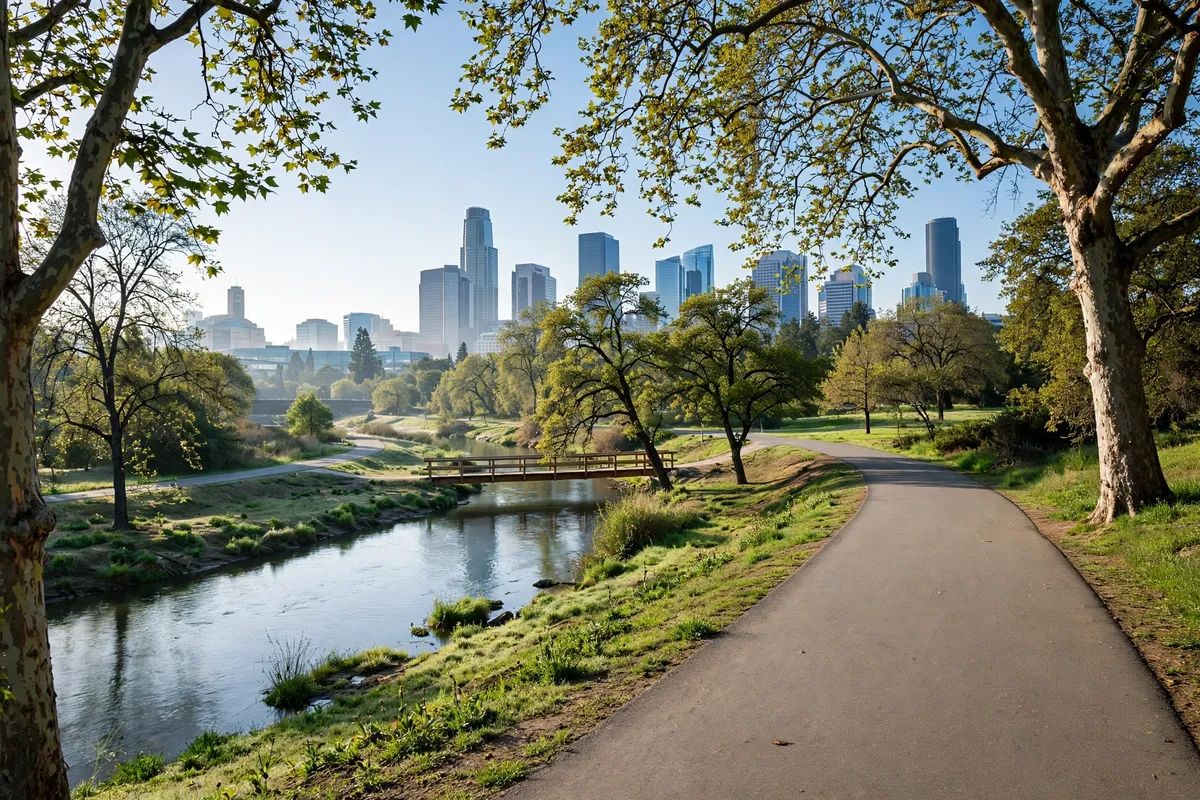
The Guadalupe River Trail runs past the campus district, from the bay side in the north to Almaden in the south.
Schools, in one view
The school picture by area is covered in the cards above. One warning from experience, and it is the sharpest in this series: the homes nearest this campus do not answer to the district their city name suggests. North San Jose answers to Santa Clara Unified and Berryessa Union, and both districts have lived through closure votes in the last two years, Berryessa closing three elementary schools for 2025 and 2026. Before you offer on any home, we confirm its assigned schools, and that they are open, by its exact address, together, in writing.
Parks and the outdoors
The Guadalupe River Trail is the backyard here: eleven miles of paved path from the bay side at Alviso through the campus district and downtown to the Almaden side, tying into the Coyote Creek Trail on the way. Add the bay lands at Alviso, the sports fields across the northern districts, and the hills of Alum Rock Park at the city's east edge, and a family here is never far from green.
Daily life
Each area has a heart you can walk. Downtown San Jose and Willow Glen's main street. Santa Clara's small downtown. Murphy Avenue in Sunnyvale. Castro Street in Mountain View. Add strong public libraries in every area and weekend sports leagues everywhere, and the ordinary errands of life stay close and easy.
Weekends
The airport beside the campus district makes family visits and getaways simple, the coast sits over the hill by 17 or by 92, and Caltrain and BART open the rest of the region from the stations on this page. Families here do not run out of Saturdays.
Questions Samsung Semiconductor employees ask
Short answer: the questions below are the ones I hear most, answered the way I answer them in person.
Is this the Samsung headquarters?
It is Samsung Semiconductor's North American headquarters, in Samsung's own words, and it is not the global headquarters of Samsung, which is in Suwon, South Korea. The building at 3655 North First Street houses the chip business's research, marketing and sales teams and its labs for memory, logic and displays. Two nearby names cause the confusion: Samsung Research America is a separate arm in Mountain View, and the Samsung Strategy and Innovation Center sits in Menlo Park. If your offer names one of those, tell me, and we will draw a different map together.
How many people work at the San Jose campus?
Samsung does not publish a current San Jose headcount, and I will not guess one into print. What is dated and documented is the opening: Samsung brought more than 700 employees together when the headquarters opened in September 2015, in a building designed for up to 2,000 people. Directory websites print size bands for the United States company as a whole, and they disagree with each other; none of them is a count of this campus, so none of them appears on this page as one. The honest picture is a headquarters campus of ten stories and about 1.1 million square feet that has been buying the buildings beside it, which tells you more about its present than any band would.
I read that Samsung is moving its headquarters and cutting hundreds of jobs. Is that this campus?
No, and the distinction matters. Those 2026 headlines concern Samsung Electronics America, the consumer electronics business, which is moving its United States headquarters from Englewood Cliffs, New Jersey to Plano, Texas, with 739 roles affected there. That is a different Samsung company, in a different state, in a different business. For this campus, no San Jose reduction was found in this research, and the documented campus news in 2025 and 2026 is the opposite: two buildings beside the headquarters bought in cash, in February 2025 and October 2026. Do not let a New Jersey headline price a San Jose decision.
Can I take a train to this campus?
Light rail, yes, and it is the best light rail story in the series. Tasman station stands at the campus corner, served by the Blue and Green lines, and Baypointe station just east is the Blue Line terminus and an Orange Line stop for Mountain View, Sunnyvale and Santa Clara. Caltrain needs one transfer, at Diridon or Tamien, onto the same First Street trains. Any page that puts a Caltrain station at this campus is reading the map too hopefully.
How long is the drive from Mountain View to the campus?
About thirty five to fifty five minutes at peak and twenty to thirty minutes off peak, by 237 east. Judge it against your team's real office days before you let it decide the town. It is also the one long drive on this page with a full rail alternative, the Orange Line from Mountain View station to Baypointe, so a Mountain View household can choose its commute day by day.
What does a home near the campus cost?
In round numbers, the median runs from about $1.35M in San Jose and $1.64M in Santa Clara to about $1.84M in Mountain View and $1.88M in Sunnyvale, on Redfin figures for the three months ending September 2026. Houses alone run about $1.57M in San Jose and $3.02M in Mountain View on county association figures for September 2026. All figures are approximate.
Which schools serve the homes nearest the campus?
Not the ones the city name suggests. The streets around North First Street and Tasman answer to Santa Clara Unified on the west and north, whose MacDonald High stands on Zanker Road in San Jose, and to Berryessa Union and East Side Union on the east. San Jose Unified serves downtown and the south of the city. We confirm the exact address before any offer, and we check that the school is open, because both Berryessa and San Jose Unified have been through closure rounds driven by falling enrollment.
Is the campus growing or shrinking?
Growing, on the documented record. Samsung Semiconductor paid $27 million in cash for the building at 3725 North First Street in February 2025 and $29.5 million in cash for the building at 3775 North First Street in October 2026, according to The Mercury News, together about 138,700 square feet beside the headquarters. A newspaper estimate of how many people those buildings could hold is not a Samsung figure and does not appear here as one. What the purchases do show is a company buying its own street, in cash, twice in two years.
Can I buy if much of my pay is stock?
In general, yes. Lenders who serve this region see equity pay every day. They look at the pattern of what has vested and landed over time, along with base pay and bonus. Bring the full picture early and let them judge it whole. That is general education; your own lender will give you your own answer.
How many days a week will I be on site?
There is no single Samsung answer for this campus, and any page that gives you one is guessing. Samsung's own current postings for San Jose roles range from hybrid at three days a week, to three to four days, to daily on site presence, and reporting in 2025 described a five day requirement for one specific group in the United States semiconductor business. Your team's pattern is in your offer and your manager's answer, and it should be settled before we choose how far from Tasman Drive your home can sit.
Should I rent first or buy right away?
If you know the valley and your budget is settled, buying right away saves a second move. If you are new, or your campus pattern is not yet settled, a season of renting buys knowledge that protects a very large decision. If your move comes with support from your employer, check what it covers before you choose, because it can change the math.
Your first month checklist
Short answer: do these ten things in your first month and the rest of the move gets much easier.
- Confirm which Samsung arm your offer is from, Semiconductor in San Jose, Research America in Mountain View, or the Innovation Center in Menlo Park, because each has its own campus.
- Ask your team its actual days on site, lab based or office based, in your first week.
- Ride the Blue Line to Tasman and the Orange Line to Baypointe once each, so the rail pattern is a fact.
- Drive each finalist area at school run hour, then drive it again in the evening.
- Pick the schools that matter to your family and learn their exact boundary lines, starting with the North San Jose districts.
- Put your full pay picture, base pay, bonus and vesting, in front of a lender and get approval in writing.
- Set your true top number: the price plus the tax, the insurance and any dues that follow it.
- Tour homes in at least two areas on the same day.
- Walk a stretch of the Guadalupe River Trail by the campus district one weekend morning.
- Save my number now, so the first question costs you nothing to ask.
A word from me
For more than twelve years I have helped families buy and sell homes in these towns, from first homes to grand estates, and I give every home the same care. My clients have left me 104 five star reviews, and the homes I have helped sell here add up to more than $250M. The numbers I trust most are simpler: my phone rings when a past client has a question, years after the keys.
If you are weighing a move to Samsung Semiconductor, or a move across the valley, let us talk it through. One call, no pressure, and you will leave knowing the areas, the numbers and the next step. Call me on the Peninsula line at (650) 274 1134 or the South Bay line at (408) 389 6939, or write to me at SIMON@SPSILICONVALLEY.COM.
I am glad you found this page. Wherever you land, welcome to the neighborhood.
Simon Sahi
Real Estate Agent, Signature Properties
CA DRE #01953287

Thinking of buying or selling near the North First Street campus?
Let us talk through the areas, the numbers and your timing, in one honest conversation.
Peninsula (650) 274-1134
South Bay (408) 389-6939